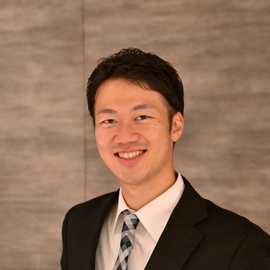
Futa (Kai) Waseda

Futa (Kai) Waseda

PhD Candidate | Trustworthy AI: Robustness, Reliability, and VLM Defense

The University of Tokyo

About Me

I study Trustworthy AI, focusing on adversarial robustness and reliable generalization from mechanism to deployment:

  • I analyze why models fail under adversarial perturbation (WACV'23).
  • I design robust training and defense methods for computer vision (ICIP'24, ICLR'25).
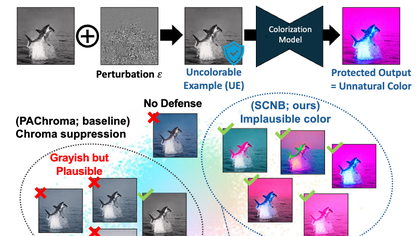
  • I extend these ideas to vision-language systems (WACV'26, ACMMM'25).
  • I also work on complementary reliability and security topics, including post-hoc calibration (ICML'23) and model IP protection (ACL'25 Main).

I have collaborated widely across academia and industry through joint research and internships, including work with TUM, NII, NEC, CyberAgent AI Lab, SB Intuitions, and Turing.

Interests

  • Trustworthy AI
  • Adversarial Robustness
  • Robust Generalization
  • Vision-Language Model Reliability

Education

  • BEng in Systems Innovation, 2020

    The University of Tokyo

  • Exchange Student, 2022

    Technical University of Munich

  • MS in Informatics, 2023

    The University of Tokyo

News

Recent Publications

Research strengths

  • Defenses for visual and vision-language models under adversarial settings.
  • Reliable generalization via calibration and robustness analysis.
  • Practical security themes, including model IP protection.

See all publications.

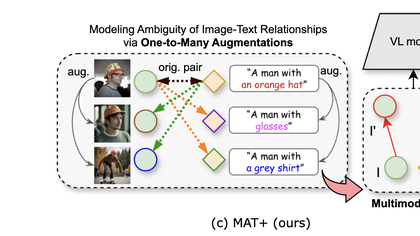
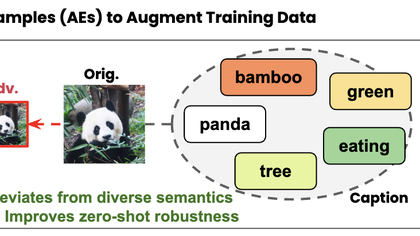
Multimodal Adversarial Defense for Vision-Language Models by Leveraging One-To-Many Relationships
WACV 2026

Multimodal Adversarial Defense for Vision-Language Models by Leveraging One-To-Many Relationships

  • Targets robust defense for VLMs under multimodal adversarial attacks.
  • Leverages one-to-many image-text relationships during adversarial training.
  • Improves robustness while preserving clean-task performance.
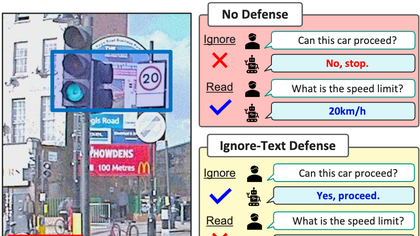
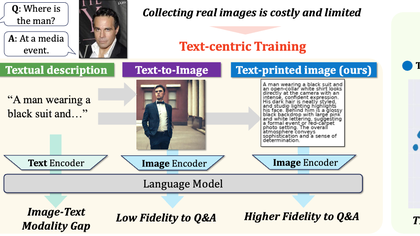
Quality Text, Robust Vision: The Role of Language in Enhancing Visual Robustness of Vision-Language Models
ACMMM 2025

Quality Text, Robust Vision: The Role of Language in Enhancing Visual Robustness of Vision-Language Models

  • Proposed QT-AFT to improve VLM robustness with high-quality text supervision.
  • Reduced class-overfitting while improving robustness to text-guided attacks.
  • Achieved strong zero-shot robustness and accuracy across 16 datasets.
MergePrint: Merge-Resistant Fingerprints for Robust Black-box Ownership Verification of Large Language Models
ACL 2025 Main

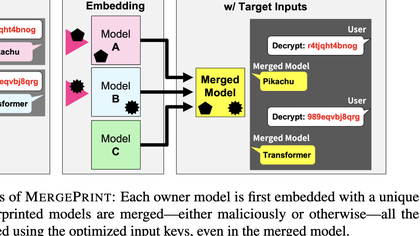
MergePrint: Merge-Resistant Fingerprints for Robust Black-box Ownership Verification of Large Language Models

  • Proposed MergePrint for merge-resistant fingerprinting of LLM ownership.
  • Enabled black-box verification without requiring model internals.
  • Preserved fingerprint detectability after model merging with limited utility loss.
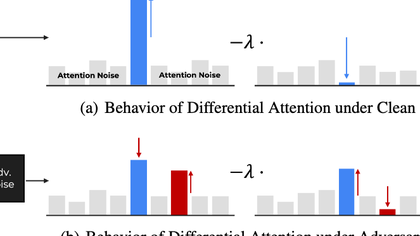
Rethinking Invariance Regularization in Adversarial Training to Improve Robustness-Accuracy Trade-off
ICLR 2025

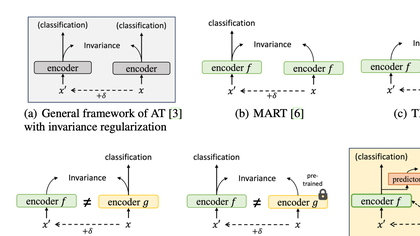
Rethinking Invariance Regularization in Adversarial Training to Improve Robustness-Accuracy Trade-off

  • Revisited invariance regularization to improve the robustness-accuracy trade-off.
  • Proposed AR-AT with asymmetric loss, stop-gradient, predictor, and split-BN.
  • Learned adversarially invariant yet discriminative representations more effectively.
Defending Against Physical Adversarial Patch Attacks on Infrared Human Detection
ICIP 2024

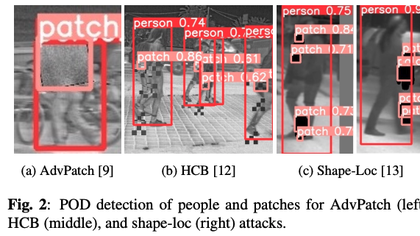
Defending Against Physical Adversarial Patch Attacks on Infrared Human Detection

  • First defense study for physical adversarial patches in infrared human detection.
  • Proposed POD, an efficient patch-aware training and detection strategy.
  • Achieved strong robustness to unseen patch attacks while improving clean precision.
Beyond In-Domain Scenarios: Robust Density-Aware Calibration
ICML 2023

Beyond In-Domain Scenarios: Robust Density-Aware Calibration

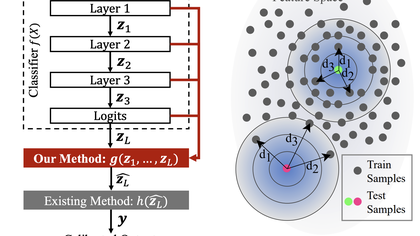
  • Proposed DAC, a KNN-based density-aware post-hoc calibration method.
  • Improved uncertainty reliability under domain shift and OOD conditions.
  • Maintained strong in-domain performance across diverse models and datasets.
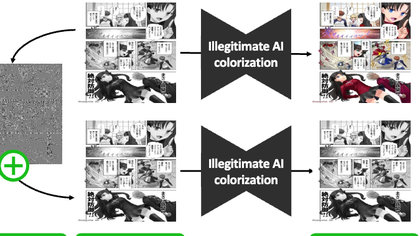
Closer Look at the Transferability of Adversarial Examples: How They Fool Different Models Differently
WACV 2023

Closer Look at the Transferability of Adversarial Examples: How They Fool Different Models Differently

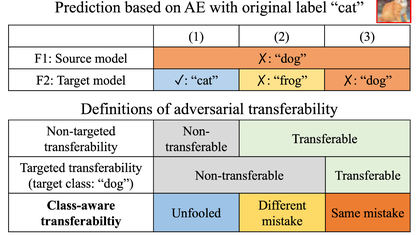
  • Analyzed class-aware transferability by separating “same mistake” and “different mistake” cases.
  • Showed that different mistakes can appear even between similar models.
  • Linked transfer behavior to model-specific use of non-robust features.

Experience


Research Internship

Turing

Apr 2025 – Present Tokyo, Japan.
Research focus: reliable vision-language models.


Research Internship

SB Intuitions

Aug 2024 – Aug 2025 Tokyo, Japan.
Research focus: LLM’s IP protection.


Research Internship

CyberAgent AI Lab

Feb 2024 – Jan 2026 Tokyo, Japan.
Research focus: deep learning, vision-language models, and adversarial robustness.


Research Internship

NEC Corporation

Aug 2023 – Dec 2023 Tokyo, Japan.
Research focus: deep learning, computer vision, adversarial robustness, and parameter-efficient training.


CTO

Madori LABO(まどりLABO)

Apr 2023 – Present Tokyo, Japan.
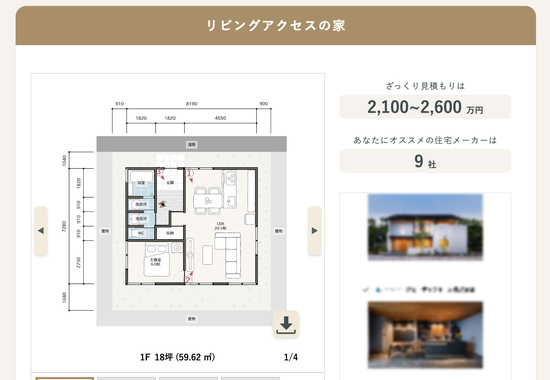
Co-founding engineer at a startup building an AI-driven floor-plan design assistant.


Research Assistant

National Institute of Informatics

May 2020 – Present Tokyo, Japan.
Research focus: deep learning, computer vision, and adversarial robustness.


Technical Advisor

Ollo inc.

May 2020 – Present Tokyo, Japan
Started as a machine learning engineer and now provide technical guidance from a researcher’s perspective.

Awards

NII Inose Outstanding Student Award (NII猪瀬優秀学生賞), 2025

Received the NII Inose Outstanding Student Award (NII猪瀬優秀学生賞).

MIRU'24 Student Encouragement Award (MIRU'24 学生奨励賞)

Received the MIRU 2024 Student Encouragement Award (MIRU'24 学生奨励賞).

Won the special prize at SAS analytics hackathon 2019.(SAS Institute Japan, The Analytics Hackathon 2019 特別賞)

In the contest, participants were given data and asked to construct machine learning system with high accuracy. (article url: https://enterprisezine.jp/article/detail/12209?p=2)

Won the first prize at MDS data science contest 2018.(MDSデータサイエンスコンテスト 優勝)

In the contest, participants were given big data and asked to perform value-generating analysis freely. Our group won the first prize and we were able to submit a paper. See the publication section.

Accomplish­ments

Summer School for Deep Generative Models 2020

Learned deep generative models from basics to state-of-the-art.

Chair for Global Consumer Intelligence (GCI 2018)

Learned how to utilize big data by machine learning technology.

Side Projects

Floor Plan App (間取り生成アプリ)

Floor Plan App (間取り生成アプリ)

Floor Plan App is a web application that generates a floor plan from a given request.
Twitter Image Captioning

Twitter Image Captioning

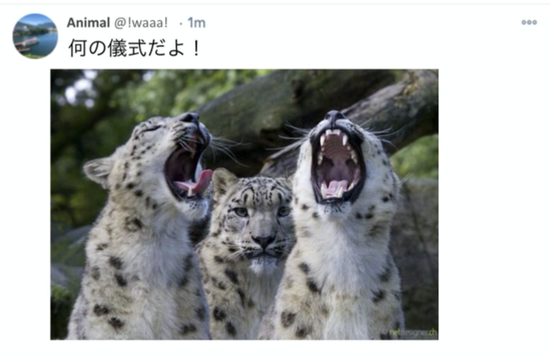
Made a model which outputs text from a image like human tweets, using Encoder-Decoder Model. Application of image captioning technique.
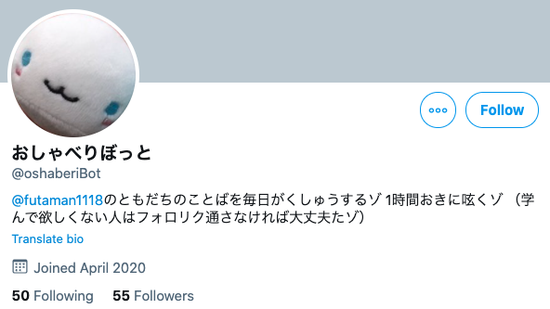
Oshaberi-Bot(おしゃべりぼっと)

Oshaberi-Bot(おしゃべりぼっと)

My first twitter bot app. He learns japanese from his followers, by fitting retrieved data to Markov model.
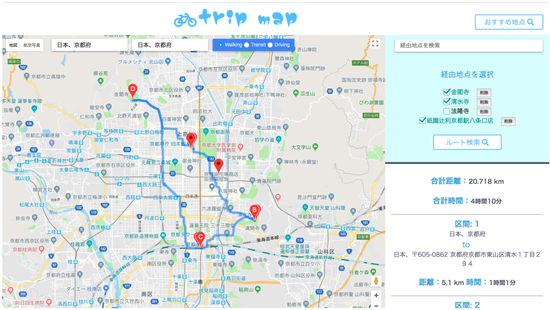
trip map

trip map

Demo web application I made in school. In this app, you can clip the place you want to go in the future, find the shortest way to go through the chosen spots. I was responsible for front-end system using html, css, javascript.